- Published
- 3 min read
- Category: Education
Calligraphy, Lettering, and Typography
The Difference Between Calligraphy, Lettering, and Typography
Introduction
Calligraphy, Typography, and Lettering
These three terms all refer to disciplines that work with letterforms, and that may be the only thing they have in common.
The world of letterforms is vast, so it is hardly surprising that some people find it difficult to distinguish between them.
We will describe the characteristics of each discipline and present examples to help you recognize them. I hope that, after reading this article, you will be able to avoid the confusion these terms can cause for beginning designers and readers outside the field.
Calligraphy
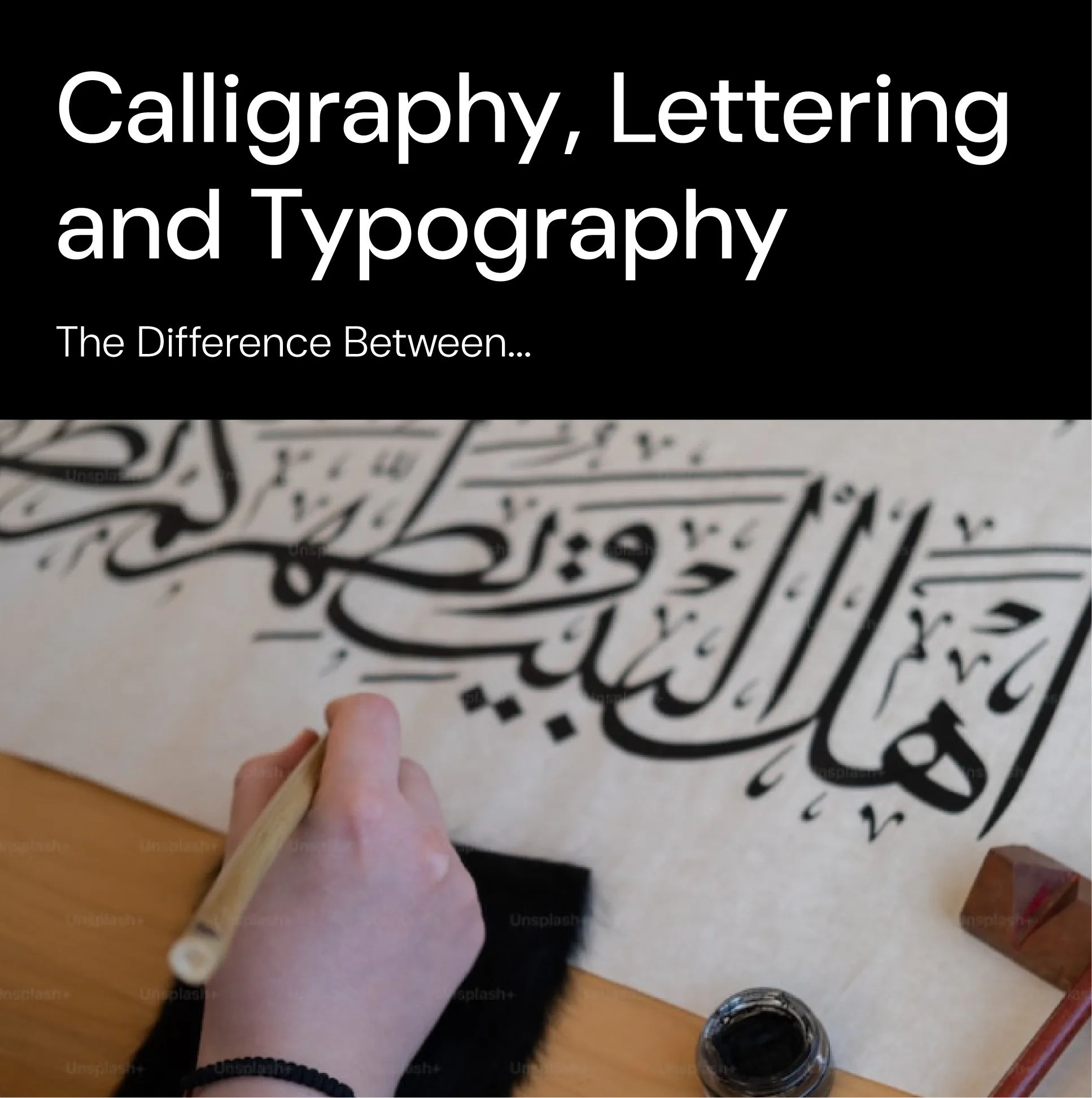
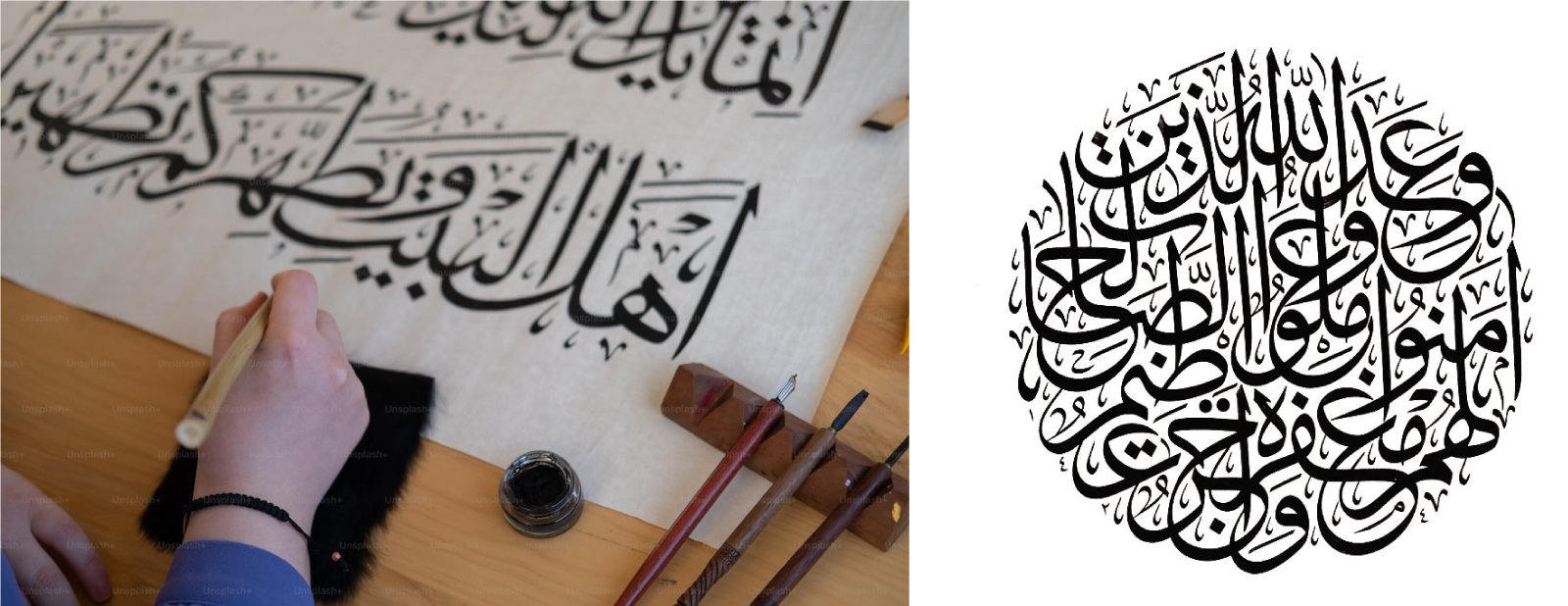
In calligraphy—the traditional art of writing—patience and sustained practice allow letters to come together in harmony and tell beautiful stories. Becoming an accomplished calligrapher takes years of training and practice. Behind every letter is the creativity of the calligrapher, a master of this remarkable art.
There is something special about the moment the reed pen touches the paper. The resulting letterform depends on the tools and materials: the ink and paper, and the size and shape of the reed pen, or qalam. Together, these elements contribute to the beauty of the composition. The letters flow with precision and skill to create compelling works of calligraphy.
Each letter’s final form follows an established model and strict rules. The letters are written with the reed pen, with only very slight refinements made to the forms afterward.
Calligraphy extends beyond the writing of texts. It can bring together elegance, beauty, and complex expression, like a language that speaks silently beyond the boundaries of words.
Typography and Type Design
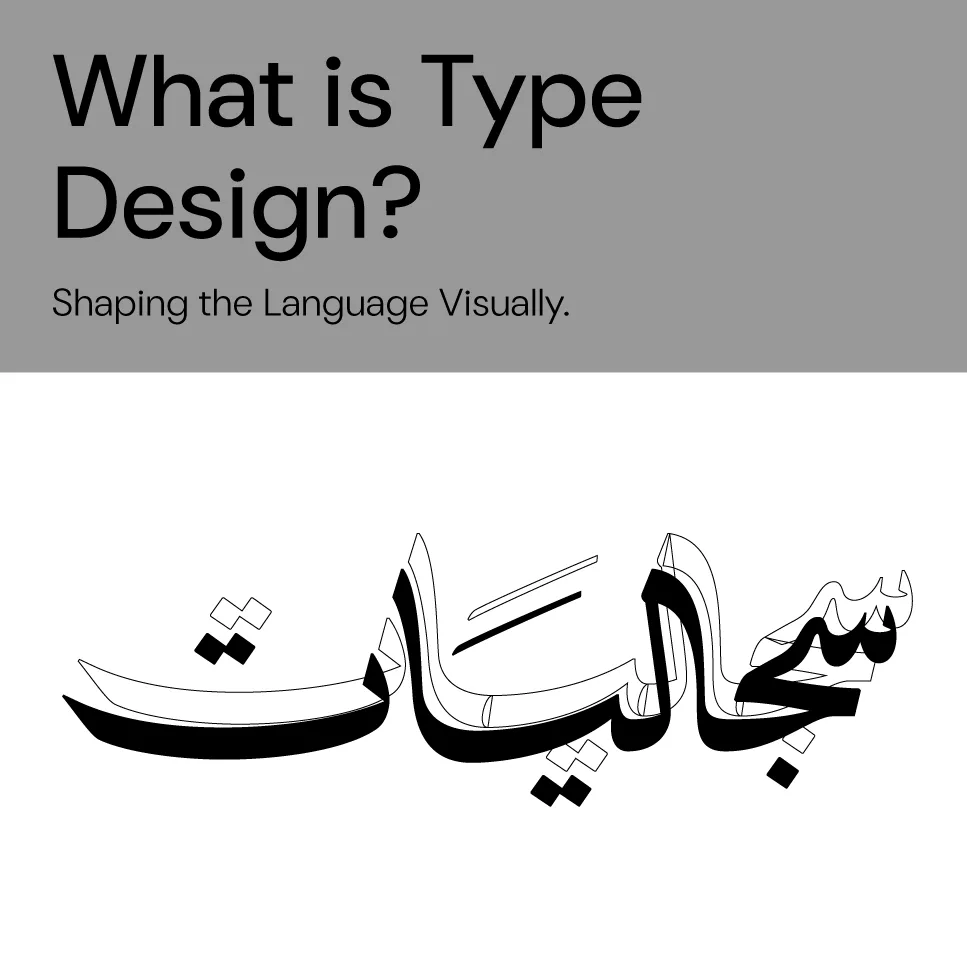
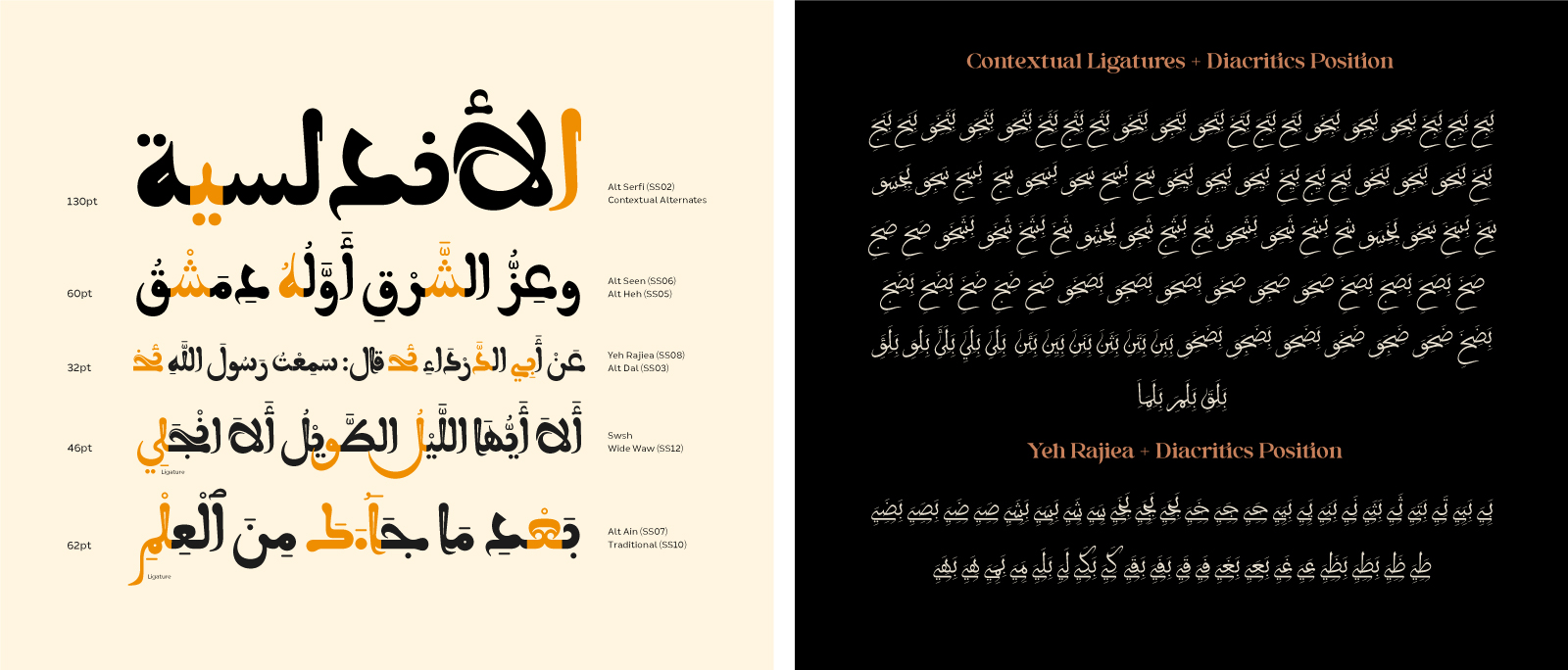
In typography, a typeface provides a predefined system created for other designers to use. Designing that system requires letterforms to be coherent and consistently developed—a considerable challenge. All the letters must work together as a set, which calls for simplification and reduction.
In Arabic type design, the aim is for a letter, wherever it occurs within a word, to connect smoothly with the surrounding letters wherever joining is required.
Type design, in turn, is built around a system of reproduction and repetition. The focus is on the typographic process itself and how efficiently it works.
Typefaces come in families and different weights, with each design serving a particular purpose: bold headlines, extended reading, or high-contrast display settings.
A typeface can also support multiple languages while maintaining a shared character and visual coherence across its letterforms. In this sense, type design reinterprets calligraphy for the contemporary world, with fonts providing a modern means of writing and expression.
Lettering
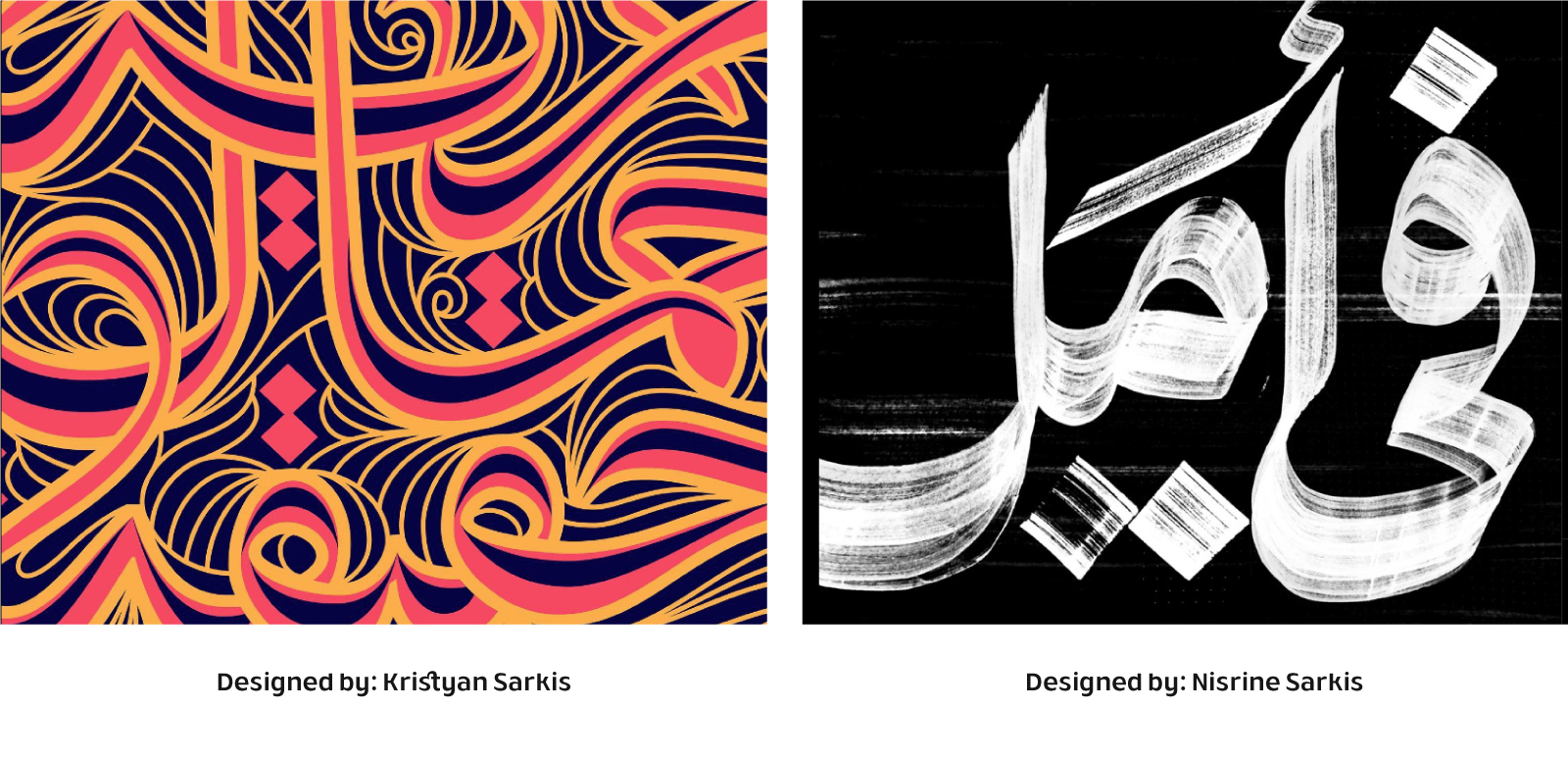
Lettering is the art of drawing letters. The artist expresses emotions and ideas through the shapes of the letterforms. Traditional calligraphic styles can provide a starting point, but their forms can be freely reworked to produce new and expressive results.
Unlike traditional calligraphy, lettering does not bind the artist to the same established rules. It allows designers to use their imagination to draw letterforms in inventive ways, turning letters into a means of expressing emotions and ideas.
In lettering, the traditional purposes of forming letters are reshaped to suit the intended idea or feeling. The finished work is not necessarily tied to a reed pen and paper: it can be created in many different media, including computers and graphics software.
Lettering draws on calligraphy without being bound by its strict rules, bringing together letterforms and art in inventive ways.