- Published
- 3 min read
- Category: Education
Styles of Arabic Calligraphy
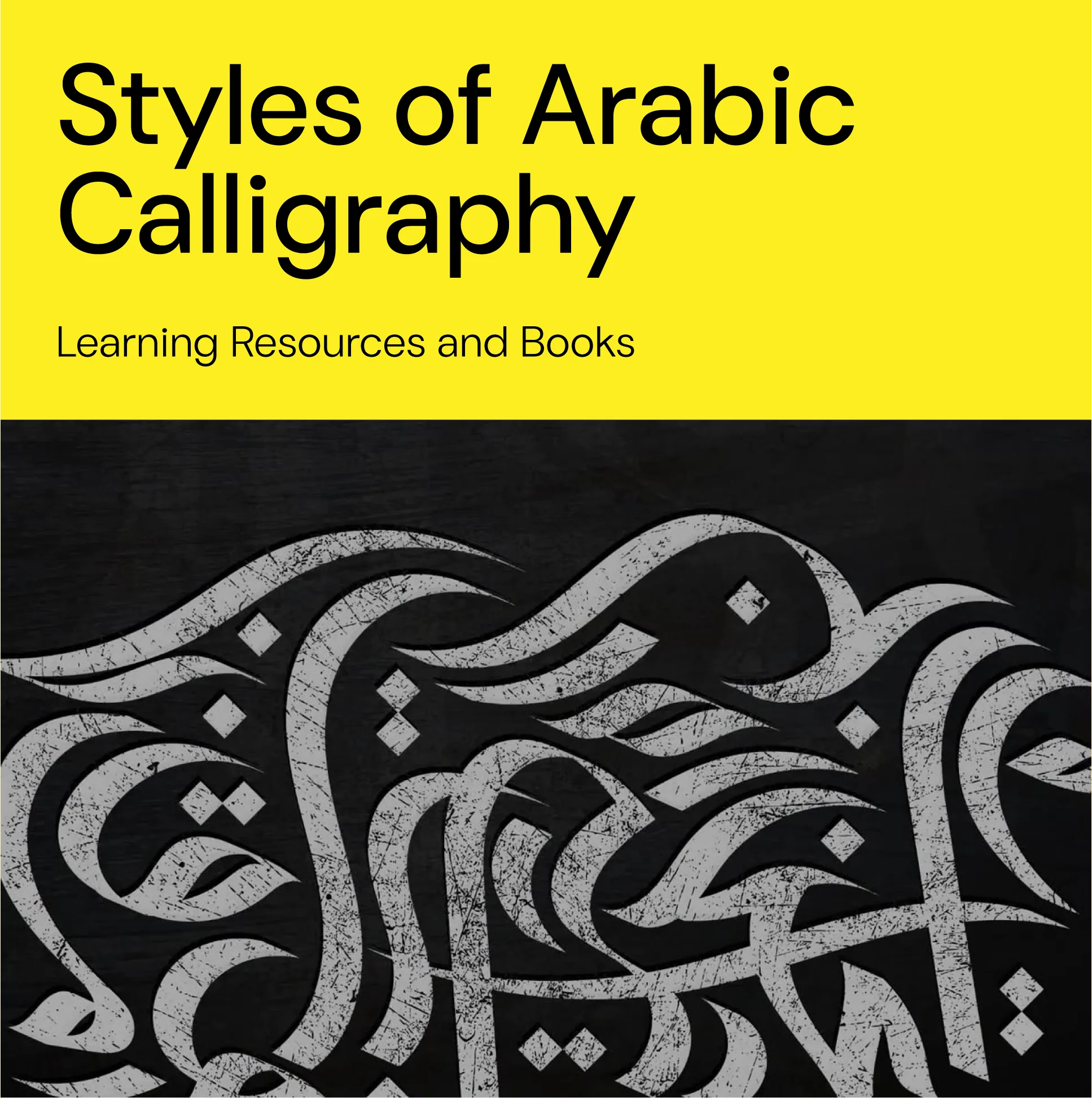
Arabic Calligraphic Styles for Typography
Learning Resources and Books
Introduction
It is important to understand that letterform design is a multifaceted art. It requires a deep understanding of the essential elements of visual storytelling, foremost among them a knowledge of Arabic calligraphic styles and a commitment to studying them.
Begin by studying and understanding a range of Arabic calligraphic styles. Examine historical manuscripts and listen to the stories they carry. Then turn to typefaces: study their underlying conventions and the interpretations their designers have made. There is a great variety of styles, each with its own history and distinctive character.
Make use of the resources in the accompanying file, whether by seeking out the references listed or exploring further online. Connect with the design community and share knowledge and experience. A commitment to learning and experimentation will help you develop your skills and make clear progress in the field.
Begin your type design journey with a deep understanding of Arabic calligraphic styles, and tell a unique story through every letter you design.
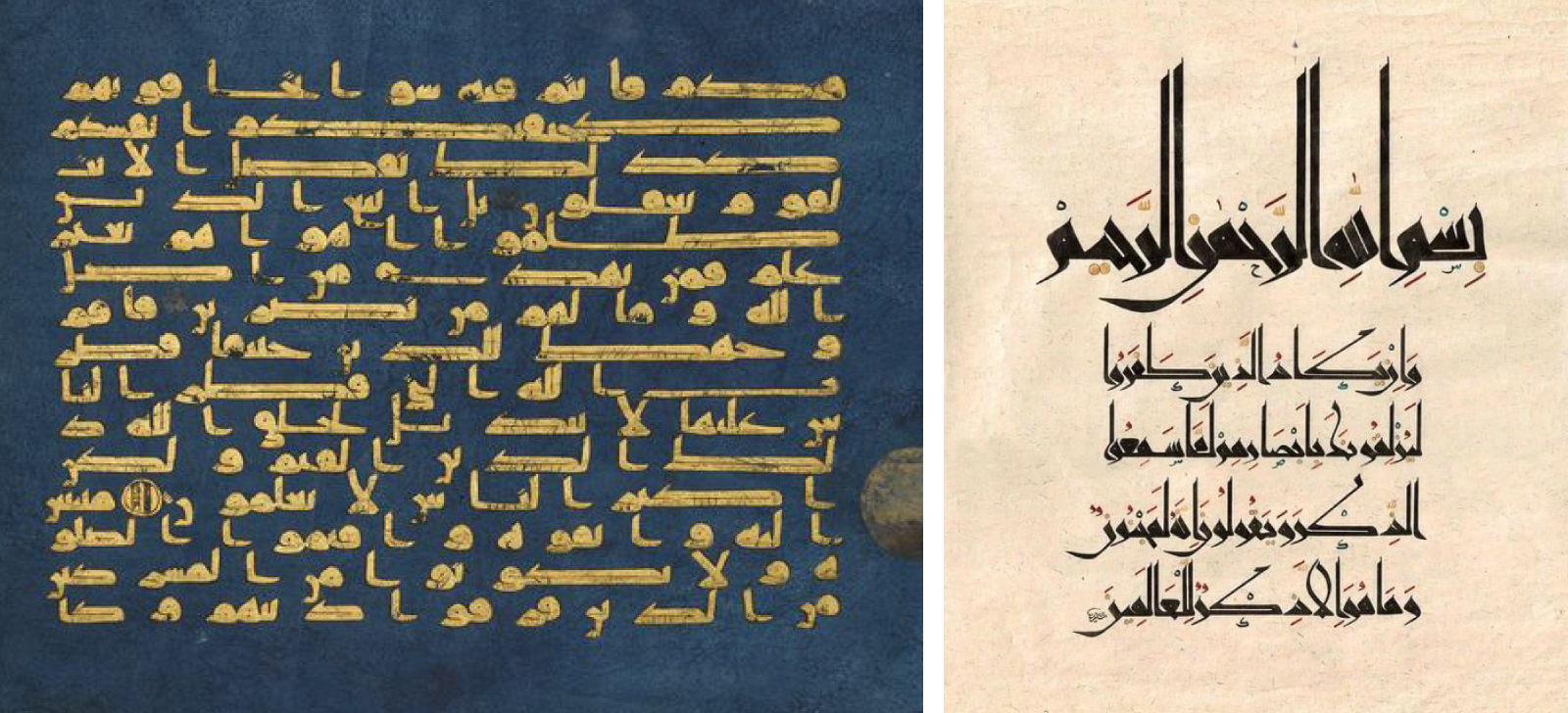
Kufic Styles
Kufic encompasses a wide and diverse range of styles. Some were used to copy the Qur’an, including Qur’anic Kufic and Eastern Kufic. Others were used to decorate buildings, including Square Kufic and other geometric Kufic styles.
Learning resources
Qur’anic Kufic — calligrapher Vahid Mousavi Jazayeri.الكوفي المصحفي — الخطاط وحيد جزائري
The Qayrawani Script — calligrapher Amer Ben Jeddou.الخط القيرواني — الخطاط عامر بن جدو
Almoravid Kufic — calligrapher Muhammad Omar Abu Zayd.الكوفي المرابطي — الخطاط محمد عمر أبو زيد
Fatimid Kufic Letterforms — calligrapher Issam Abd al-Fattah.حروف الكوفي الفاطمي — الخطاط عصام عبد الفتاح
The Rules of Kufic Calligraphy — calligrapher Yusuf Dhannun.قواعد الخط الكوفي — الخطاط يوسف ذنون
Plain Kufic — historical manuscripts.الكوفي البسيط — مخطوطات قديمة
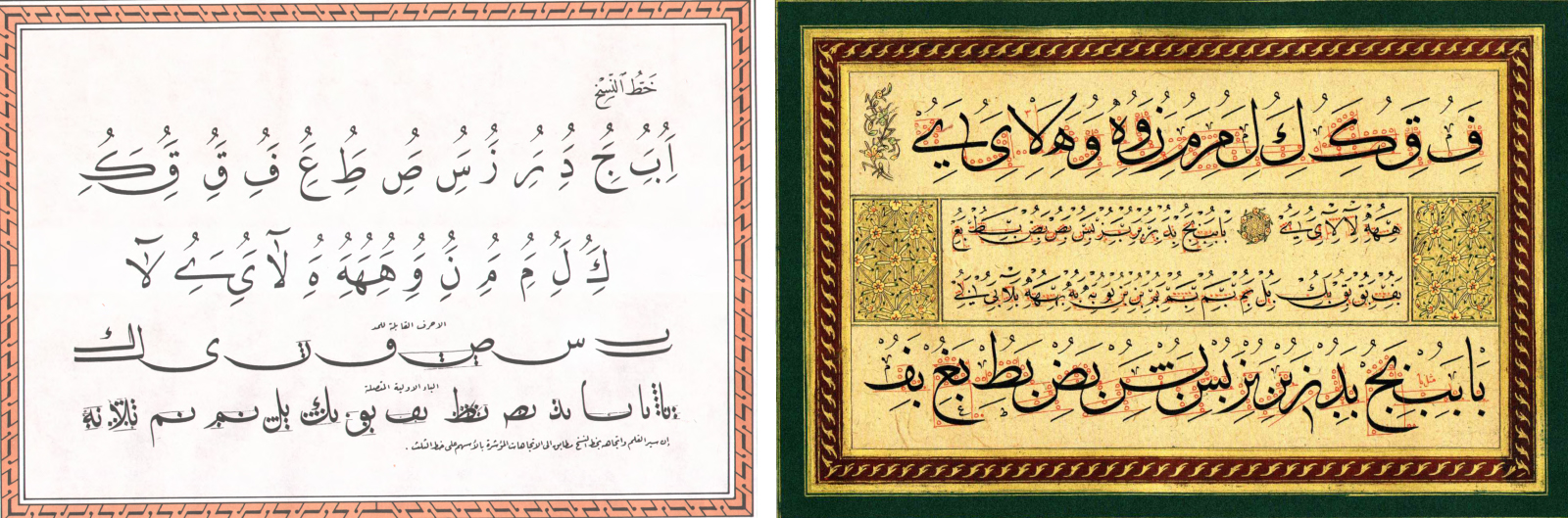
Naskh and Thuluth
Naskh: often called the “servant of the Qur’an” because it was used to copy the Qur’an. It is also used in books, printed publications, and advertising, and is known for its legibility and broad range of applications.
Thuluth: a complex calligraphic style used in decorative compositions and works of art.
Learning resources
Naskh and Thuluth Practice Exemplars by the calligrapher Mehmed Şevki Efendi.أمشاق الخطاط محمد شوقي في النسخ والثلث
Thuluth Script — calligrapher Abbas al-Baghdadi.خط الثلث — الخطاط عباس البغدادي
The Rules of Arabic Calligraphy — Hashim Muhammad al-Khattat.قواعد الخط العربي — هاشم محمد الخطاط
The Secrets of Letterform Construction in Naskh — Muhammad Amzil.أسرار الرسم في خط النسخ — محمد أمزيل
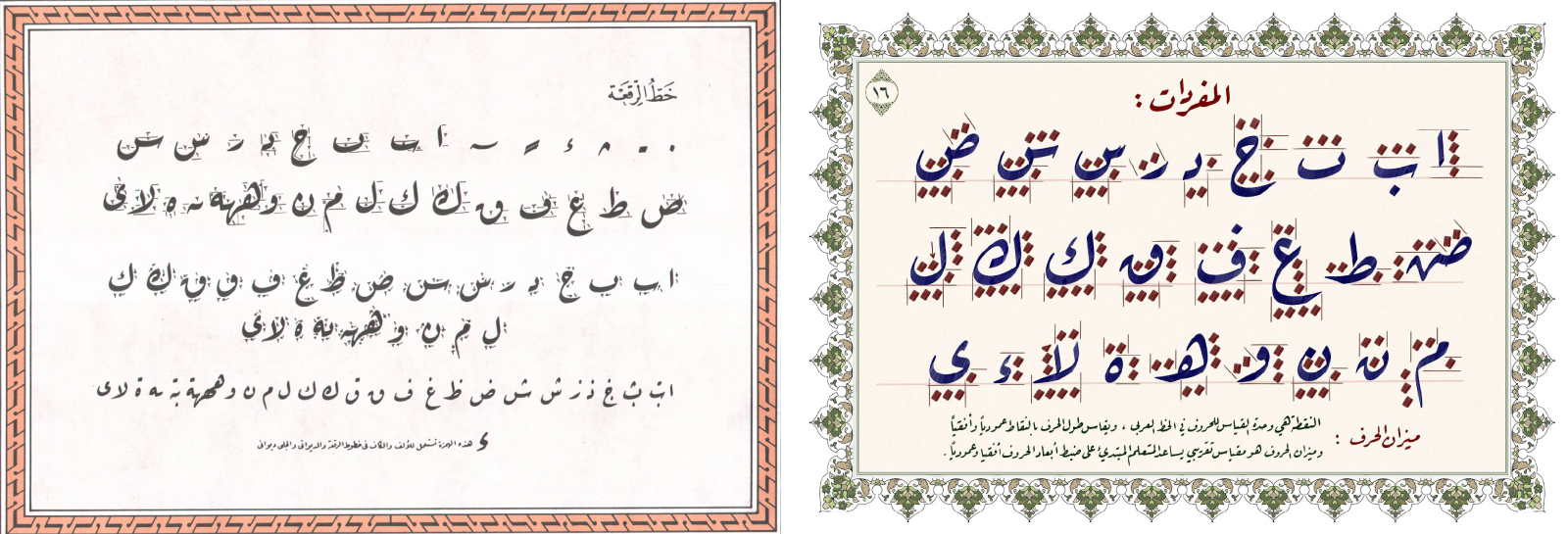
Ruq'ah
Ruqʿah is one of the simplest and least constrained styles of Arabic calligraphy, with relatively little formal embellishment or ornament. It was used for headings and rapid writing. As the press expanded, its use became more widespread in newspaper headlines and article headings.
Learning resources
The Rules of Arabic Calligraphy — Hashim Muhammad al-Khattat.قواعد الخط العربي — هاشم محمد الخطاط
Ruqʿah Practice Book — calligrapher Mukhtar Alam Mufid al-Rahman.كراسة خط الرقعة — الخطاط مختار عالم مفيض الرحمن
Maghribi
Maghribi calligraphy expresses Morocco’s distinctive cultural and artistic identity and adds a special character to Arabic calligraphy.
This style is characterized by vivid colors and is widely used in architectural ornament, decorative arts, and interior design in Morocco.
Learning resources
Maghribi Calligraphy Made Easy — calligrapher Muhammad al-Muʿallimin.الخط المغربي الميسر — الخطاط محمد المعلمين
Maghribi Mabsut Practice Book — calligrapher Adil al-Zaari.كراسة الخط المغربي المبسوط — الخطاط عادل الزعري
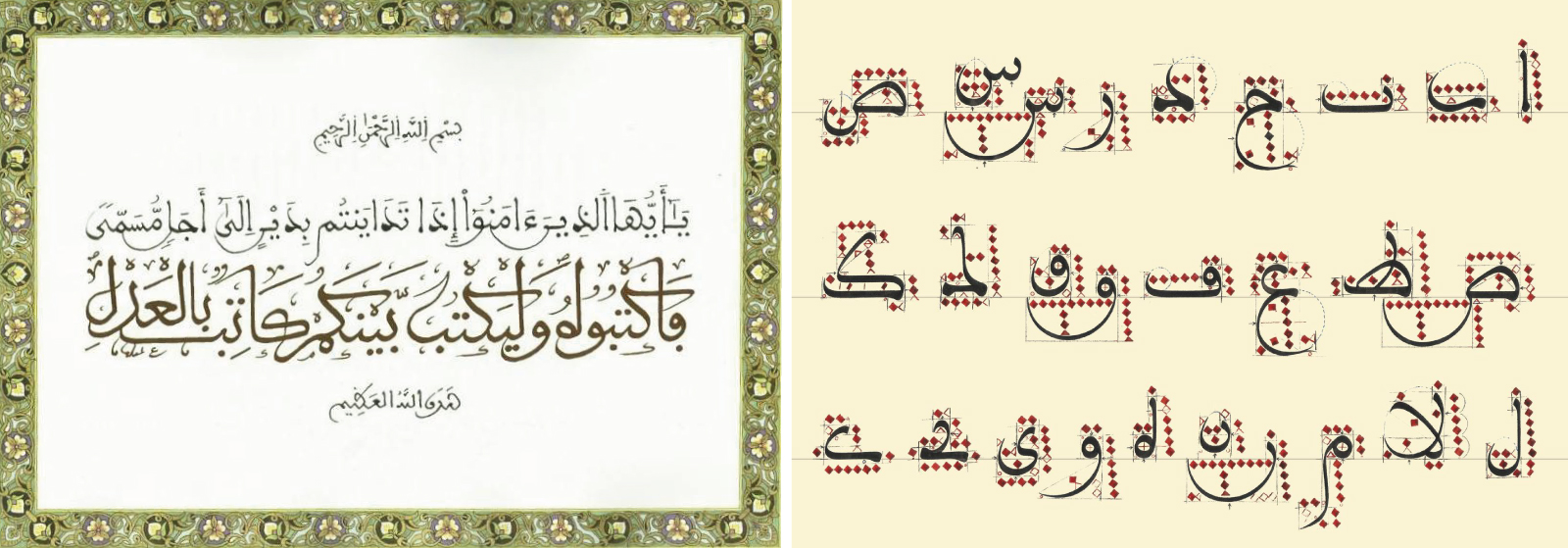
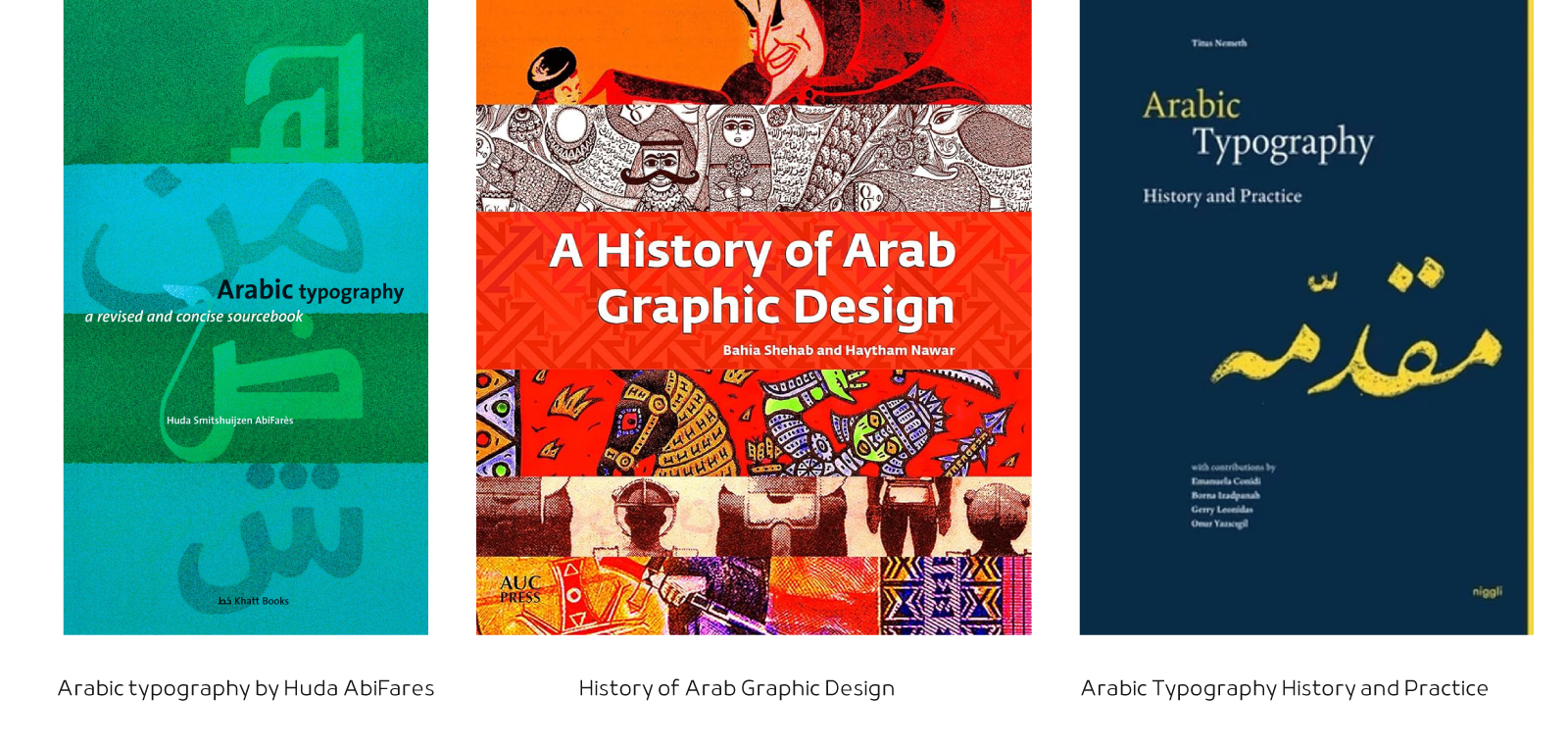
Essential Books for Your Collection
The following are suggested books on Arabic letterform design. They offer valuable resources for designers who want to deepen their understanding of type design and develop their skills.